A Vessel of Reconciliation: A Franco-German Diplomatic Gift of 1980
We are delighted to have in our collection the following item, acquired via a descendant of the former German Chancellor Helmut Schmidt.
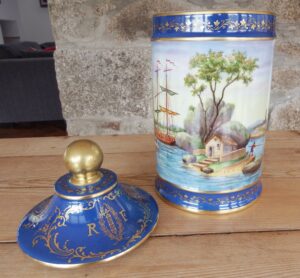
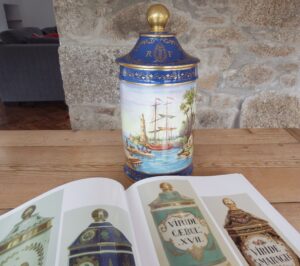
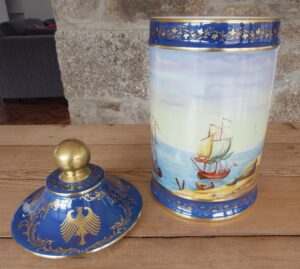
This porcelain apothecary jar, crafted in 1980 by Atelier Le Tallec represents a striking union of French artistic tradition and European political history. Commissioned by the President of France Valéry Giscard d’Estaing as an official state gift, it was presented to the President of Germany during their diplomatic meeting in Bonn that July.
The object’s form—the apothecary jar—evokes centuries of European healing practices and symbolizes preservation, care, and renewal. It was, therefore, a subtle but fitting metaphor for the task shared by France and Germany during the late 20th century: nurturing a partnership that would stabilize Western Europe and eventually give shape to the European Union.
Le Tallec’s workshop, known for its meticulous hand-painted decoration and lineage with the Sèvres porcelain tradition, imbued the piece with the cultural refinement for which French diplomacy is renowned. Its gilded motifs and meticulous craftsmanship reflect France’s longstanding practice of using porcelain as a cultural ambassador—an art form that communicates prestige as effectively as any formal speech.
Yet the jar’s significance extends beyond its beauty. As a tangible artifact exchanged between two heads of state, it embodies the personal diplomacy that helped transform Europe after World War II. By 1980, Franco-German cooperation was essential to the continent’s stability; this gift stands as a quiet but potent reminder of that relationship.
Today, the jar is more than a decorative vessel. It is a historical witness—an object that carries within it the story of reconciliation, partnership, and the belief that art can be a bridge between nations.
 Artistic Value:
Fully hand-painted porcelain by Atelier Le Tallec.
Historical & Political Value:
Commissioned specifically for the President of France.
Presented to the President of Germany at a pivotal moment in European political history.
Direct connection to Cold War–era European unity efforts.
Rarity:
A unique commission.
Franco-German and European Union historical importance.
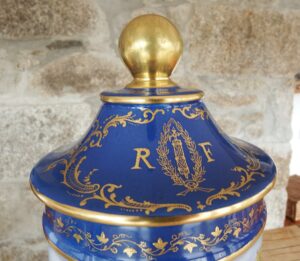
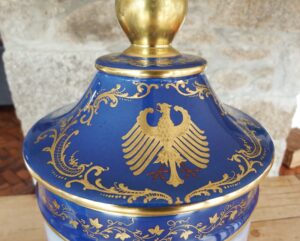
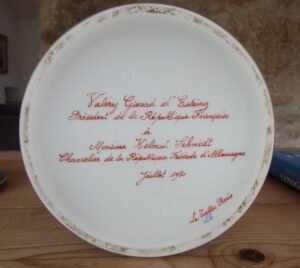
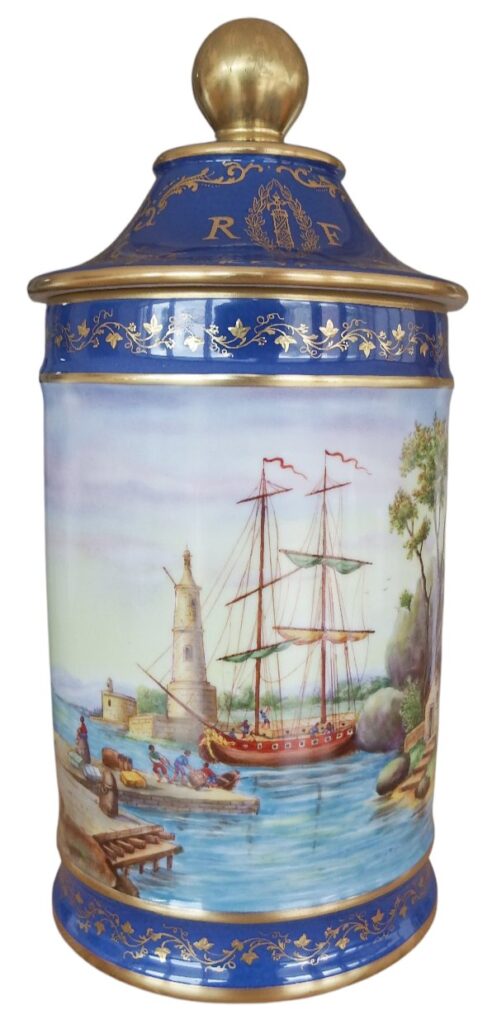
The meeting was especially significant as it marked the first state visit by a French leader to West Germany in some 18 years. The porcelain jar has a cylindrical body, decorated with a continuous coastal port scene, and the lid features the device for the République Française opposite the West German eagle coat of arms, both in gilt on a blue ground. The base is inscribed with the Le Tallec mark, date cypher, decorator’s initials and descriptive text.
Helmut Schmidt and Valéry Giscard d’Estaing were two leading figures in European and international politics. For decades they were joined by a strong bond of friendship. In the 1970s, they controlled the fates of their citizens as the German Chancellor and the French President respectively. For years, their friendship shaped Europe’s development and provided important stimuli in international politics. Once, as soldiers during the Second World War, they were enemies; then, after the war, they became friends; and eventually they ended up as allies at the heads of their respective countries. Working together harmoniously as a team, they set up the European Council, started the G6 summit meetings and launched the European Monetary System. Together they worked hard to build the foundations of today’s European Union.
Images